
Category:
How Much Fuel Does a Plane Use? Aviation Fuel Types Explained
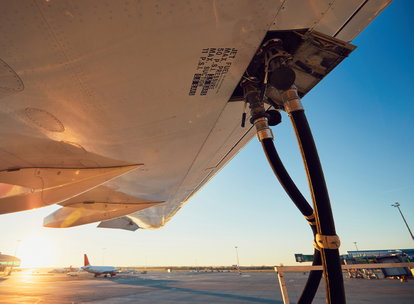
How Much Fuel Does a Plane Use, and What Type of Gas do Planes Need?
When people ask how much gas a plane uses, the real answer starts with a small correction: most aircraft do not use “gas” the same way cars and trucks do. Aviation fuel depends on the aircraft, the engine, and the mission — which is why reliable aviation fuel supply matters for airports, operators, and aviation service providers. Cadence Petroleum supports aviation customers with fuel solutions built around dependable supply, product knowledge, and operational needs. Learn more about our aviation solutions at Cadence | Aviation.
That distinction matters. Aviation fuel is not a one-size-fits-all product. Aircraft type, engine design, route length, payload, weather, altitude, reserve requirements, and fueling procedures all play a role in how much fuel is used and what type of fuel is required.
How Much Fuel Does a Plane Use?
Fuel usage can vary widely. A small single-engine training aircraft may burn only several gallons per hour. A turboprop can burn dozens of gallons per hour. A regional jet may use hundreds of gallons per hour, while a large commercial airliner can use thousands of gallons per hour during long-haul flights.z
That range is why there is no useful “average plane” number. A short training flight, a private business trip, a regional passenger route, and an international cargo flight all have very different fuel requirements.
A Better Way to Think About it is by Aircraft Category:
Small piston aircraft are generally the lightest fuel users. These are the aircraft many people picture at local airports, flight schools, and private hangars. Depending on the model and operating conditions, they may use a modest amount of Avgas per hour.
Turboprops use more fuel, but they are built for stronger performance, higher payloads, and longer missions. Many business, utility, cargo, agricultural, and regional aircraft fall into this general category.
Jet aircraft require significantly more fuel because of their size, speed, altitude, and mission profile. A regional jet flying a short route uses far less total fuel than a widebody aircraft flying across the ocean, but both rely on carefully specified jet fuel and disciplined handling.
The biggest takeaway is simple: aircraft fuel usage depends on the aircraft and the mission. Distance matters, but so do weight, weather, taxi time, climb, cruise altitude, reserves, and operating procedures.
What Type of Fuel do Planes Use?
The two most common categories are Avgas and jet fuel.
Avgas, short for aviation gasoline, is used in many piston-engine aircraft. These are typically smaller aircraft, including many training planes, personal aircraft, and certain specialty aircraft. Avgas is different from automotive gasoline and is designed for aviation engine requirements.
Jet A is the primary jet fuel used in the United States. It is a kerosene-based fuel used in turbine-powered aircraft, including turboprops, business jets, regional jets, and commercial airliners.
Jet A-1 is similar to Jet A but is more commonly used internationally. One of the key differences is its lower freezing point, which makes it useful for long-distance and cold-weather operations.
For customers outside the aviation industry, the names may sound interchangeable. They are not. The right fuel must match the aircraft, engine requirements, operating environment, and applicable fuel specifications. That is why aviation fueling places such a high priority on product identification, storage, filtration, handling, and documentation.
Why Fuel Quality and Handling Matter
In aviation, fuel is not just another operating expense. It is a safety-critical product.
Contamination, water intrusion, incorrect product selection, poor storage practices, or improper dispensing procedures can create serious risk. That is why aviation fuel programs place so much emphasis on trained personnel, clean storage systems, proper filtration, routine inspection, and clear procedures.
For industrial customers, this is the part that should feel familiar. The product itself matters, but so does the supply chain behind it. Fuel quality, availability, delivery timing, equipment condition, and technical understanding all affect day-to-day operations.
Whether you are supporting aircraft, airport equipment, ground fleets, industrial sites, or backup operations, dependable fuel supply starts with knowing the product and respecting the application.
What is Sustainable Aviation Fuel?
Sustainable Aviation Fuel, or SAF, is one of the biggest long-term trends in aviation fuel.
SAF is made from non-petroleum feedstocks such as waste oils, fats, greases, biomass, municipal waste streams, alcohols, and other renewable or waste-based materials. Once produced and approved through the proper pathways, SAF can be blended with conventional jet fuel and used in existing aircraft and fueling infrastructure.
That last part is important. SAF is not a casual substitute or experimental add-on. It must meet strict aviation fuel standards and blend requirements before it can be used safely in aircraft.
SAF is getting attention because aviation is difficult to decarbonize. Unlike passenger cars, aircraft cannot easily switch to battery-electric power for most commercial operations. Aviation needs high-energy liquid fuels, especially for long-distance flight. SAF gives the industry a way to reduce lifecycle emissions while continuing to use much of the existing aircraft and fuel infrastructure.
But SAF is still developing. Production is growing, but it remains a very small share of global aviation fuel today. Cost, feedstock availability, production capacity, certification, and distribution infrastructure are all major challenges. That makes SAF a serious future-facing trend, but not an overnight replacement for conventional jet fuel.
Bottom Line
So, how much fuel does a plane use? It depends on the aircraft, route, load, and operating conditions.
What type of gas does a plane use? Smaller piston aircraft often use Avgas, while turbine aircraft typically use Jet A or Jet A-1.
And what is Sustainable Aviation Fuel? It is a lower-carbon aviation fuel pathway designed to work within strict aviation standards and help the industry reduce emissions over time.
For Cadence customers, the larger lesson is this: aviation fuel is about more than gallons. It is about the right product, the right specification, the right handling, and the right supply partner.
Contact Cadence for aviation fuel solutions.
1. U.S. Department of Energy — Alternative Fuels Data Center
2. International Air Transport Association
3. Federal Aviation Administration
4. National Aviation Academy — What Are the Different Types of Aviation Fuel?
5. HowStuffWorks