
Category:
Best Grease for Heavy Equipment: Choosing the Right Grease
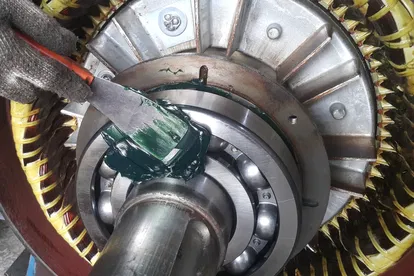
Without proper lubrication, heavy-duty equipment grinds to a halt, bringing vital operations to a costly standstill. Selecting the best grease for your heavy equipment reduces the chances of catastrophic failure, enhances productivity, and improves the machine’s performance and longevity.
Use the guide below to learn more about selecting the best grease for heavy equipment and keeping business operations running smoothly.
Why Does Choosing the Right Grease Matter?
Grease improves the overall functionality and longevity of heavy-duty equipment. This specifically formulated lubricant delivers exceptional performance within the extreme and unforgiving operating conditions characteristic of environments or circumstances that demand heavy equipment.
Bearings, joints, pins, and bushings require grease to reduce wear and tear, prevent overheating due to increased friction, and soak up vibrations.
Grease's main components are a base oil, a thickener, and one or more additives. The base oil is typically derived from refined petroleum or synthetic oils. Thickeners incorporate metals — such as lithium, sodium, and calcium — and fatty acid soaps or non-soap compounds like polyurea powders.
Different types of grease contain additives that enhance their performance by targeting corrosion and oxidation or increasing their resistance to wear and extreme temperatures.
The National Lubricating Grease Institute (NLGI) rates grease according to viscosity. Grease with a “000” NLGI rating has low viscosity, while grease with a “6” rating is highly viscous and nearly solid. The grease used in maintaining heavy equipment typically contains a “2” NLGI rating, but low-temperature operating conditions may call for grease with a “0” or “1” rating.
The proper grease helps reduce maintenance costs and extends component life by creating a fluid barrier between components that reduces friction and prevents contamination. Grease designed specifically for heavy-duty equipment excels in numerous lubricating properties, from water and corrosion resistance to thermal and mechanical stability.
What Are Common Grease Types for Heavy Equipment?
The best grease for heavy equipment must withstand extreme temperatures, bear the brunt of heavy loads, and resist corrosion and contaminants. Not all grease types are up to the task of performing in these conditions.
Although the five grease types listed below may be common in heavy equipment use, matching their corresponding properties to their respective applications is vital for the best results.
Lithium-Based Grease
Highly viscous and commonly used as a general-purpose grease, lithium-based grease excels in extremely hot environments and under shock loads.
While it delivers respectable corrosion resistance, it’s not ideal for conditions with extreme pressures.
Calcium Sulfonate Grease
Although calcium sulfonate grease is more expensive than lithium-based grease, it performs better under pressure and in wet environments. Also considered a multipurpose grease, calcium sulfonate performs better in colder temperatures.
Polyurea Grease
Due to its makeup, polyurea grease is typically not compatible with most greases. However, it’s primarily used on industrial equipment to lubricate conveyor systems or electric motor bearings.
Polyurea grease is known for its long service life, solid performance in high-speed applications, and remarkable oxidation stability.
Molybdenum Disulfide (Moly) Grease
This type of grease — often referred to as “moly” grease — tends to be more solid than the other lubricants listed here. It is a go-to lubricant in conditions with heavy loads and extreme pressures, helping coat and protect metal surfaces.
However, moly grease doesn’t do well in high-speed applications due to its increased viscosity.
Synthetic Grease
Synthetic grease occupies a higher tier of lubricants designed to last longer and protect heavy equipment from heavy loads, excessive pressures, and varying temperature extremes. Due to its nature, synthetic grease excels at lubricating high-speed parts without sacrificing any of its superior properties.
Best Grease for Heavy Equipment: 4 Common Applications
Now that you know more about the types of heavy equipment grease available, it’s time to match them to the appropriate applications. Explore the types of heavy equipment grease used in construction, agricultural, industrial, mining, and off-road environments below.
Construction
Construction equipment — such as bulldozers, cranes, excavators, and loaders — requires grease that can withstand significant friction, resist moisture, and bear the weight of heavy loads and extreme pressure. Moly and calcium sulfonate grease fulfill many of these requirements.
Agricultural
Harvesters, plows, balers, tractors, and other farm equipment often rely on synthetic grease for year-round performance. However, moly grease helps increase the performance and longevity of load-bearing elements. Lithium and calcium sulfonate grease help resist contaminants and perform well at varying temperatures.
Industrial
Heavy equipment characteristic of industrial settings requires grease that performs well at high speeds, hotter temperatures, and significant pressure. Industrial presses, bearings, and motors tend to prefer moly, polyurea, or synthetic grease.
Mining and Off-Road
Only a select set of conditions stop mining operations, which is why lubricants in this particular industry must perform well in extremely hot and cold temperatures under pressures and shock loads that would otherwise push general-purpose grease to its limits.
Similar to industrial settings, mining and off-road applications often call upon moly and synthetic grease, but calcium sulfonate grease is popular as well.
What To Consider When Selecting Grease
While mixing certain greases is permissible in some cases — such as switching to a new type of grease — it’s vital to ensure the selected greases do not alter each others’ properties. Mixing incompatible greases can result in poor performance and even premature failure.
Below are additional factors to consider when selecting the best grease for heavy equipment:
- Load and pressure: Heavy equipment typically operates under extreme loads and high pressures, which necessitates the use of grease with a high load-carrying capacity and additives that enhance performance while minimizing breakdown.
- Temperature and environment: The best grease for heavy equipment remains stable, supports low-temp pumpability, and features a high dropping point to ensure the proper viscosity.
- Contamination and corrosion resistance: All grease contains some element of contamination and water resistance, but wet applications — such as marine and mining — often require increased and long-lasting corrosion resistance.
Beyond choosing the best grease for heavy equipment, it’s also vital to apply the proper amount of lubricant to ensure optimal operation. Failing to grease heavy equipment well enough can cause premature wear, increase friction and resistance, and reduce efficiency.
Too much grease can generate excessive heat, attract contaminants, and even over-pressurize seals.
How To Choose the Best Grease for Heavy Equipment
The original equipment manufacturer (OEM) of heavy-duty machinery typically recommends a particular lubricant, as noted in the owner’s manual.
Follow these guidelines closely when selecting the best grease for heavy equipment. Many manuals list compatible greases that meet the required consistency, classification, thickener, type, and performance features.
With time and experience, heavy-duty equipment mechanics and operators can also match the best grease to particular operating conditions. In determining which grease best suits the job at hand, consider the key factors listed above: load and pressure, temperature and environment, and contamination and corrosion resistance.
Test and monitor the heavy equipment’s performance any time you diverge from the manufacturer’s recommendations.
Selecting the best grease for heavy equipment also requires purchasing only quality lubricants designed to boost performance and longevity. To ensure proper care, train staff on necessary lubrication maintenance. Regular inspections can also help identify issues with the grease you selected, limiting downtime and costly repairs.
High-Quality Grease for Your Heavy Equipment’s Performance
Industries worldwide rely on heavy-duty equipment — and proper lubrication — to tackle some of the toughest jobs. Once you’ve determined the best grease for heavy equipment in your business or fleet, rely on the experts at Cadence to deliver high-quality lubricants designed to keep your wheels turning.
Call us at 336-629-2061 to learn more about our supply of superior lubricants and how we deliver value at every turn.
Sources:
DEFINITION OF VISCOSITY | Princeton University
The Lithium Crisis for the Grease Industry | NLGI
Polyurea Greases | Society of Tribologists and Lubrication Engineers